Be yourself; Everyone else is already taken.
— Oscar Wilde.
This is the first post on my new blog. I’m just getting this new blog going, so stay tuned for more. Subscribe below to get notified when I post new updates.
Be yourself; Everyone else is already taken.
— Oscar Wilde.
This is the first post on my new blog. I’m just getting this new blog going, so stay tuned for more. Subscribe below to get notified when I post new updates.
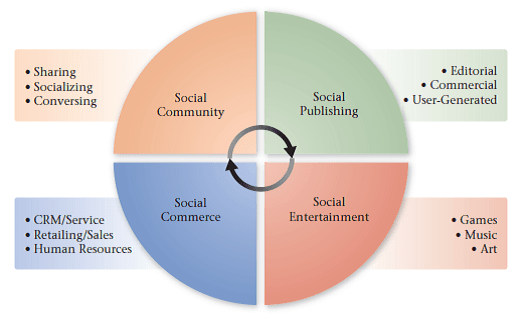
Zone 1: Social Community- Facebook, Twitter, LinkedIn, Google+, and Dig
Zone 2: Social Commerce- Groupon, Yelp, LivingSocial, TripAdvisor,
Zone 3: Social Publishing- Vine, YouTube, WordPress, Tumblr, and Flickr, TikTok
Zone 4: Social Entertainment- Second Life, Pinterest, Instagram, and Vimeo
Social commerce zones are important because they can make a difference in generating new customers and retaining them. If Groupon or Yelp are used wisely businesses who offer promotional material on these apps can bring in new customers. At the same time, it is important to understand how customers perceive your business. So, paying attention to yelp reviews is important especially in hospitality related businesses. People view reviewers and bloggers as having more credibility than businesses. A bad review can really have a damaging effect.
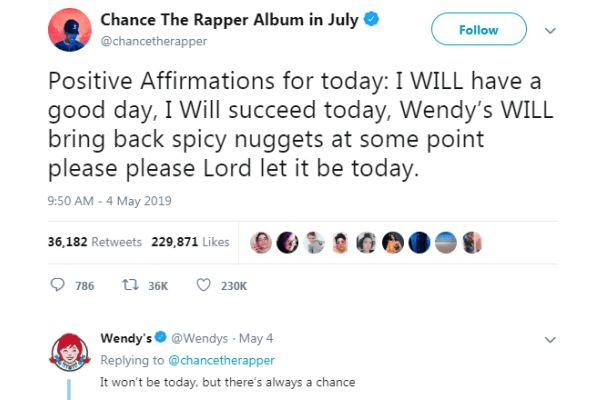
Interacting with social communities is extremely important because it has a huge impact on a company’s public image. People love to see companies being more human, the best example is Wendy’s twitter account. They perfectly engage with their community and produce messaging that generates more favor for them over their competitors.
When it comes to futuristic technology in marketing, AR is arguably the most exciting trend right now. Augmented reality is defined as:
“…a technology that incorporates digital elements into the actual line of sight. As the name suggests, augmented reality is an effort towards enhancing reality with the help of digitally generated images and features.”
By 2022, the augmented and virtual reality market is expected to reach a market size of $209.2 billion, up from a mere $14.1 billion in 2017. Pokemon Go and Snapchat filters and lenses are probably the best-known examples of AR in “everyday” use. But there is greater potential for marketing efforts to be used.
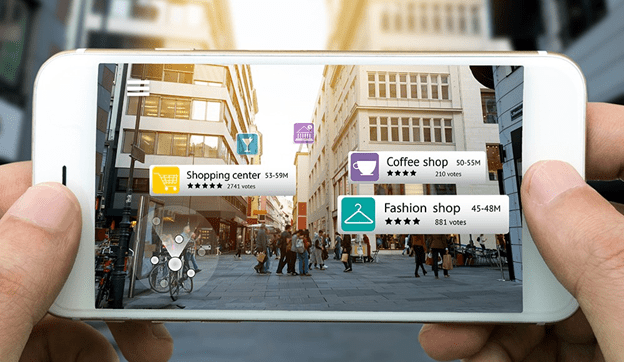
Adoption of AR has been slow, but as the technology evolves to offer more, personalized marketing and product discovery are gradually picking up.
Facebook’s AR Studio is a “powerful tool designed to make stunning interactive experiences for the Facebook camera” with which you can “distribute your content to more people across new surfaces including Instagram, Messenger and Facebook Lite.”
Augmented reality allows you to transform the customer experience in a way never before seen – a truly interactive shopping experience.
Cosmetic brand Sephora uses AR (along with VR and AI) with their Sephora Virtual Artist app. This technology allows users to “try on” different types of make-up products without ever stepping foot into a store; all they have to do is upload a photo of their face to the app. Sephora is an innovative example of how you can use augmented reality to personalize and improve the customer experience:

I think integrating this feature into existing apps to enhance shopper experience is a great idea. But I do not see it being so widely used by people out in public. I think it is something that people who shop from home will definitely adopt.
Social media Stories are like a news feed except they rely on video instead of text. Snapchat popularized the short video format. At its initial launch people saw it simply as a fad. Influencers proved everyone wrong by showing just how creative they can be with short video clips.
Now everyone wants copy Snapchats model. Facebook couldn’t buy Snapchat, so they created WhatsApp and Instagram launched its own version aswell.
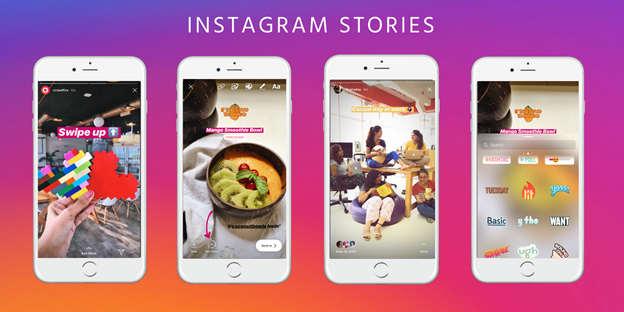
Stories present an incredible opportunity for marketing:
Marketers can capitalize on (FOMO), which affects 69% of Millennials, driving many of them to make purchases. A great feature is that they can create polls and get direct feedback from their audience. People enjoy short unedited stories because it is more genuine marketing that resonates with the audience.
This trend should be what most large companies follow. The data provided below is a clear indicator that video content is one of the best methods to market goods and services.

Video marketing is great, but marketers have to go further than that. People want to see real people with relatable stories. A rend that will continue to grow is the use of influencers. “63% of marketers plan to increase their existing budget for influencer marketing in 2020 because the ROI is that good.”

Consumers are tired of ads produced by faceless corporate brands. They are also less trusting of them. Consumers have developed a one-sided relationship with influencers. They enjoy their content and put more trust in them. But it is not just internet celebs people trust more, it is all online reviews.
Small and medium businesses with limited budgets can also benefit by partnering with micro-influencers (those with between 1,000 and 1,000,000 followers). So, you do not have to be a huge brand to use influencers for marketing. Influencers have more credibility because they recognize that their reputation is important to their brand. If trust is lost their following be lost too.
Three trends company should be aware of in 2020 moving forward are Marketing technology, Consumer Privacy and KYC, and Digital transformation and Marketing Transformation. Marketing technology is any site that has a social aspect. There is a wide range of tools available for companies to take advantage of to market their products or services. Martech and Smart Insights have provided infographics for the businesses to take advantage of. Martech’s graphic is a bit intense and over the top but Smart Insight’s is simpler. These infographics have a lot of benefit for companies that want to use social media market but do not know where to start. Most companies just steer to the most popular sights like Facebook, YouTube, and Twitter but there are hundreds of sites obscure they may be that have a large pool of users.
Privacy in an increasing concern, the number of data breaches on sites have grown to the point that consumers no longer trust companies they shop with to secure their data. People are afraid of shopping online with certain sites or using credit cards in stores. This growing issue means that marketers need to work with their colleagues to ensure that they can keep consumer data safe.
Digital transformation and Marketing Transformation are of paramount importance for companies. Businesses should adopt a hybrid marketing approach; traditional media are still important avenues for marketing but a focus on digital media should be greatly emphasized. In this new digital age focus on TV ads is bad for business. Most people do not watch ads they just fast forward past them. Traditional TV is losing to streaming services. If TV providers do not evolve traditional TV advertising will fade out of existence.
Three trends that 2020 will follow are lifecycle marketing which is a more consumer focused narrative. The idea is to focus on the customer experience to draw them in. Conversational marketing focuses on the use of smart speakers and artificial intelligence when it comes to purchases. I think that this is something companies should not do because sending advertising to someone’s email based on what their smart speaker overheard seems like an overstep and a privacy violation. This is actually the primary reason I leave my google home unplugged. Insights-driven marketing should be the primary focus of all marketers. Social media has vastly grown to be the best way to market a brand especially since brands are able to interact with their consumers. I think that lifecycle and insights marketing are absolutely important for brands. These tools make it easier to know what consumers want and do not want. People also like to see media that is relatable which is why it should be more reflective of the consumers.
What’s new? What’s next? 6 essential marketing trends for 2020
This is an example post, originally published as part of Blogging University. Enroll in one of our ten programs, and start your blog right.
You’re going to publish a post today. Don’t worry about how your blog looks. Don’t worry if you haven’t given it a name yet, or you’re feeling overwhelmed. Just click the “New Post” button, and tell us why you’re here.
Why do this?
The post can be short or long, a personal intro to your life or a bloggy mission statement, a manifesto for the future or a simple outline of your the types of things you hope to publish.
To help you get started, here are a few questions:
You’re not locked into any of this; one of the wonderful things about blogs is how they constantly evolve as we learn, grow, and interact with one another — but it’s good to know where and why you started, and articulating your goals may just give you a few other post ideas.
Can’t think how to get started? Just write the first thing that pops into your head. Anne Lamott, author of a book on writing we love, says that you need to give yourself permission to write a “crappy first draft”. Anne makes a great point — just start writing, and worry about editing it later.
When you’re ready to publish, give your post three to five tags that describe your blog’s focus — writing, photography, fiction, parenting, food, cars, movies, sports, whatever. These tags will help others who care about your topics find you in the Reader. Make sure one of the tags is “zerotohero,” so other new bloggers can find you, too.

 Marcus Blog